

Puka Pukara Cusco – The Red Fortress of the Incas
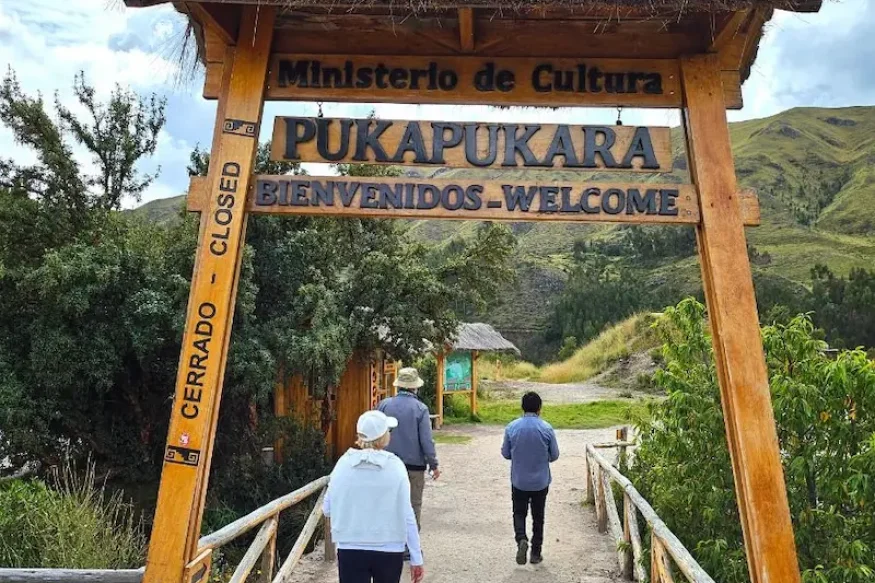
Among the fascinating archaeological sites that surround the city of Cusco, the Puka Pukara Cusco site stands out as a small but strategically important fortress. Known as the “Red Fortress” because of the reddish hue of its stones at sunset, Puka Pukara served as a military and administrative checkpoint during the Inca Empire.
Although it is smaller and less imposing than Sacsayhuamán, Puka Pukara Cusco is an essential stop on the City Tour, offering insights into the Inca military system, road network, and defensive strategies. In this guide, we will explore everything you need to know: history, meaning, architecture, how to visit, entrance fees, nearby attractions, and travel tips.
The Meaning of Puka Pukara
The name Puka Pukara comes from Quechua:
Puka: red
Pukara: fortress or defensive structure
Thus, the literal translation is “Red Fortress.” This name is due to the reddish tones of its stones, which glow beautifully in the evening light.
History of Puka Pukara Cusco
Inca Period
Puka Pukara was built during the height of the Inca Empire in the 15th century, probably under the reign of Pachacutec. Its main function was that of a military post and checkpoint along the Inca road system (Qhapaq Ñan).
It guarded access to the Sacred Valley of the Incas, Tambomachay, and Cusco itself. From its elevated position, soldiers could spot travelers, merchants, or possible enemies approaching.
Historians believe it also functioned as a tambo (resting place) for messengers (chasquis) and traveling nobles. Its proximity to Tambomachay suggests it may have been a security station for the “Bath of the Inca.”
Spanish Conquest
Unlike other larger fortresses, Puka Pukara did not play a significant role during the resistance against the Spanish, but its remains show the importance of the Inca military network.
Today
Puka Pukara is one of the four archaeological sites included in the Cusco City Tour, visited daily by travelers curious to learn more about Inca defenses.
Architecture of Puka Pukara Cusco
Strategic Location
Puka Pukara is built on a hill at an altitude of 3,580 meters above sea level (11,745 ft), overlooking the surrounding valleys and mountains. This elevated position made it an ideal lookout point.
Construction Style
The fortress is built with medium-sized stones, not as perfectly polished as those of Sacsayhuamán. This suggests it was more functional than ceremonial.
Key Structures
Walls and Platforms: Defensive walls and terraces surround the site.
Rooms and Niches: Small enclosures used for lodging soldiers or storing supplies.
Watchtowers: Elevated spots where guards could observe incoming travelers.
Aqueducts: Remains of water channels indicate water was stored and used inside the complex.
Although simple, the layout of Puka Pukara Cusco reveals its role as a multifunctional checkpoint.
Location of Puka Pukara Cusco
Distance from Cusco: 7 km northeast (about 20 minutes by car)
Altitude: 3,580 m.a.s.l.
Nearby Sites: Just 1 km from Tambomachay, and close to Qenqo and Sacsayhuamán
Because of its location along the main Inca road, it connected Cusco with the Sacred Valley and further towards the Amazon jungle.
How to Get to Puka Pukara
By Tour
Most visitors go as part of the Cusco City Tour (half-day tour). This is the most convenient way, as it includes transport, guide, and entrance fees.
By Taxi
A taxi from Cusco city center costs about 25–30 soles. You can combine it with visits to Tambomachay and Qenqo.
On Foot
Adventurous travelers can hike from Cusco to Puka Pukara, following the Inca roads. The walk takes about 2 hours uphill.
Entrance to Puka Pukara Cusco
To enter, you need the Cusco Tourist Ticket (Boleto Turístico Cusco):
Partial Ticket (BTP): Approx. 70 soles. Includes Puka Pukara, Tambomachay, Qenqo, and Sacsayhuamán. Valid for 1 day.
General Ticket (BTI): Approx. 130 soles. Includes 16 sites in Cusco and the Sacred Valley. Valid for 10 days.
Tickets are not sold separately for Puka Pukara.
Tours to Puka Pukara Cusco
Half-Day City Tour
The most popular option to see Puka Pukara. Itinerary usually includes:
Qoricancha (Temple of the Sun)
Cusco Cathedral (optional)
Sacsayhuamán
Qenqo
Puka Pukara
Tambomachay
Duration: ~5–6 hours (1:30 pm – 6:30 pm)
Private Tours
Private city tours allow more time at each site, including Puka Pukara, with personalized explanations.
What to See at Puka Pukara
Defensive Walls: The red-toned stone walls showcase Inca military architecture.
Rooms and Enclosures: Believed to be used as barracks or storage.
Viewpoints: Panoramic views of the Cusco valley and surrounding mountains.
Connection to Tambomachay: Its strategic function as a guardian post for the Bath of the Inca.
Hotels Near Puka Pukara Cusco
While there are no hotels directly at the site, Cusco city (just 20 minutes away) offers plenty of accommodation options:
Luxury
Belmond Hotel Monasterio
JW Marriott El Convento Cusco
Palacio del Inka
Mid-Range
Casa Andina Premium Cusco
Tierra Viva Cusco Centro
Novotel Cusco
Budget
Pariwana Hostel
Kokopelli Hostel
Hostal El Triunfo
Restaurants Near Puka Pukara
Since the site is in a rural area, most visitors return to Cusco for meals. Some recommended options near the Main Square:
LIMO Cocina Nikkei – Peruvian-Japanese fusion with plaza views
Chicha by Gastón Acurio – Gourmet Andean cuisine
Tunupa Restaurant – Buffet and live music
Cicciolina – Tapas and fusion dishes
Travel Tips for Visiting Puka Pukara Cusco
Altitude: At 3,580 m, the air is thin. Take your time and stay hydrated.
Best Time to Visit: Dry season (May–October) for clear skies. In rainy season (November–April), expect green landscapes but muddy paths.
Combine Visits: Puka Pukara is best visited with Tambomachay, Qenqo, and Sacsayhuamán in the same tour.
What to Bring: Comfortable shoes, jacket, sunscreen, water, and camera.
Photography Tip: Visit at sunset to see the stones glowing red.
Why Visit Puka Pukara Cusco?
Because it offers a glimpse into the military and administrative organization of the Inca Empire. While not as massive as other sites, Puka Pukara Cusco is unique for its strategic role and the beauty of its reddish stones against the Andean sky.
For history lovers, it represents the defensive side of the Inca civilization. For photographers, it offers stunning landscapes. And for travelers, it’s a perfect stop to understand the connection between Cusco, Tambomachay, and the Sacred Valley.
The Puka Pukara Cusco archaeological site is a small but important Inca fortress that served as a checkpoint, lookout post, and resting place for travelers and soldiers. Its reddish stones, defensive walls, and panoramic views make it a fascinating destination just outside Cusco.
Included in most city tours, Puka Pukara Cusco is easy to visit and provides valuable context about Inca military strategy and daily life.
Whether you’re exploring it as part of the classic city tour or hiking along the Inca roads, Puka Pukara is a site that enriches your understanding of the Inca world and offers unforgettable views of the Andean landscape.