

Inca Trail in January – Complete Guide to Trekking in the Rainy Season
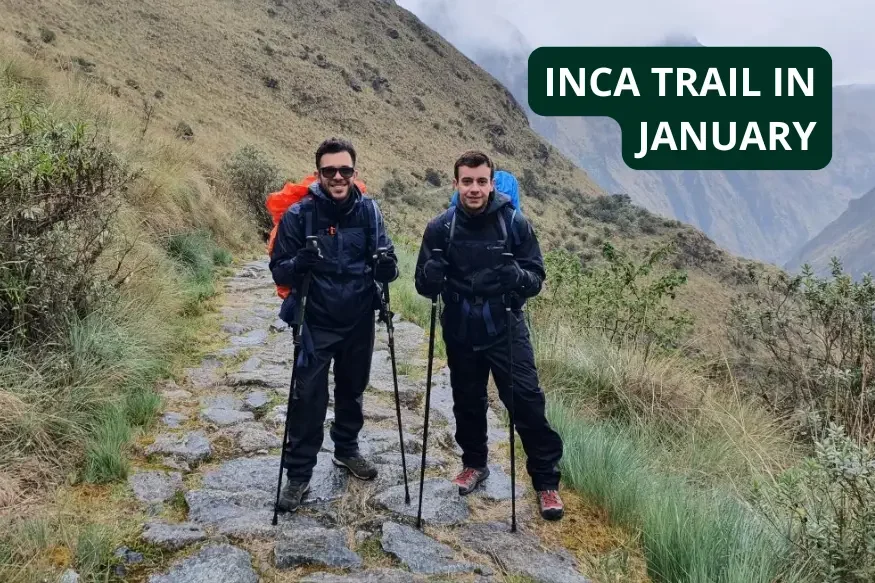
The Inca Trail in January offers a very different experience compared to the dry months of the year. January is part of the rainy season in Cusco, with frequent showers, muddy trails, and misty mountain landscapes. While it is considered one of the wettest months to trek, it still attracts adventurers who are prepared for the challenge and want to experience the Inca Trail with fewer crowds.
In this complete guide, we’ll explore everything you need to know about doing the Inca Trail in January: weather, difficulty, permits, packing tips, pros and cons, and what to expect along the way to Machu Picchu.
Weather on the Inca Trail in January
January is one of the rainiest months in Cusco. This means trekkers need to prepare for wet and slippery conditions throughout the hike.
Rainfall: Heavy and frequent. Expect rain almost every day, especially in the afternoon and evening.
Temperature (Day): 14°C to 18°C (57°F–64°F).
Temperature (Night): 5°C to 8°C (41°F–46°F). Nights are less cold than in the dry season.
Humidity: Very high, making clothes and gear harder to dry.
Visibility: Mist and clouds are common, sometimes hiding panoramic views.
✅ Verdict: The Inca Trail in January is wet, slippery, and challenging, but also atmospheric and lush.
Is January a Good Time to Hike the Inca Trail?
It depends on your expectations. January is not ideal for everyone, but it has some advantages for certain types of travelers.
Advantages
Fewer Crowds: The trail is much quieter compared to peak season.
Permit Availability: Easier to book permits — often available just weeks in advance.
Lush Scenery: Valleys and mountains are greener thanks to the rains.
Warmer Nights: Compared to May–August, nights are not as cold.
Authentic Atmosphere: Mist and clouds create a mystical, dramatic environment.
Disadvantages
Heavy Rain: Trekkers will almost certainly get wet.
Slippery Trails: Mud and rain make the hike harder.
Reduced Visibility: Panoramic views may be hidden by fog.
Photography Challenges: Rain and mist may limit photo opportunities.
Inca Trail Permits in January
Permits are mandatory year-round for the Classic Inca Trail (4 days / 3 nights).
Daily Limit: 500 permits (including guides and porters).
Availability: January is low season, so it’s much easier to secure a permit.
Booking: Only authorized operators can arrange them. Independent trekking is not allowed.
Note: The Inca Trail closes every February for maintenance, so January is the last month before the closure.
Difficulty of the Inca Trail in January
The Inca Trail is always moderate to challenging, but in January the difficulty increases because of rain.
Total Distance: ~42 km (26 miles)
Highest Point: Dead Woman’s Pass at 4,215 m (13,828 ft)
Daily Hiking: 6–9 hours
Main Challenge: Wet and slippery trails, plus altitude.
✅ With proper gear and mindset, the trek is still achievable for fit travelers.
Packing List for the Inca Trail in January
Because of the rainy season, waterproof and quick-dry gear is essential.
Clothing
Waterproof hiking boots with strong grip
Rain jacket and poncho (essential)
Quick-dry shirts and pants
Thermal layers for high passes
Fleece or down jacket for evenings
Hat, gloves, and extra socks
Gear
Backpack cover and dry bags
Trekking poles with rubber tips
Sleeping bag rated to -5°C (can be rented in Cusco)
Headlamp with extra batteries
Waterproof bags for electronics and passport
Essentials
Sunscreen (UV rays are strong even with clouds)
Insect repellent
Snacks: nuts, chocolate, energy bars
Reusable water bottle or hydration bladder
Highlights of the Inca Trail in January
Even in the rain, trekkers can enjoy the breathtaking ruins and scenery:
Patallacta (Llactapata): Agricultural terraces on Day 1.
Dead Woman’s Pass (Warmiwañusca): The highest and most difficult section.
Runkurakay: Circular lookout post.
Sayacmarca: Cliffside “Inaccessible Town.”
Phuyupatamarca: The “Town Above the Clouds.”
Wiñay Wayna: Lush terraces and ceremonial baths near Machu Picchu.
Sun Gate (Inti Punku): The dramatic entrance to Machu Picchu.
Machu Picchu: The ultimate reward, shrouded in mist and mystery in January.
Tours for the Inca Trail in January
Classic Inca Trail (4 Days / 3 Nights)
The full trek, including all the ruins and Machu Picchu.
Short Inca Trail (2 Days / 1 Night)
Starts at Km 104, visits Wiñay Wayna, and reaches Machu Picchu via the Sun Gate. Less exposure to rain since it’s shorter.
Alternatives for January
If you’d rather avoid heavy rain:
Lares Trek: More cultural and less crowded.
Salkantay Trek: Scenic, but also rainy in January.
Choquequirao Trek: Very challenging in wet conditions, not recommended.
Accommodation on the Inca Trail
Classic Trail: Camping at designated sites (Wayllabamba, Pacaymayo, Phuyupatamarca, Wiñay Wayna). Facilities are basic.
Short Trail: Hotel in Aguas Calientes before Machu Picchu visit.
Food on the Inca Trail
Tour operators provide nutritious meals to keep trekkers energized:
Breakfast: pancakes, quinoa porridge, fruit
Lunch: soups, rice, pasta, meat or vegetarian dishes
Dinner: hot, hearty meals with tea
Snacks: popcorn, biscuits, and warm drinks
Tips for Hiking the Inca Trail in January
Expect to Get Wet: Even the best gear won’t keep you 100% dry. Be ready to embrace it.
Acclimatize First: Spend 2–3 days in Cusco to adjust to altitude.
Start Early: Mornings are drier; afternoons bring more rain.
Protect Your Gear: Use dry bags for electronics and documents.
Hire Porters: Wet trails make carrying heavy loads even harder.
Stay Positive: The weather adds challenge, but also makes the experience unique.
FAQs About the Inca Trail in January
Is the Inca Trail open in January?
Yes, it’s open. The trail closes only in February.
How rainy is January?
Very rainy. Expect showers almost every day.
Are permits easy to get in January?
Yes. Compared to peak season, availability is much higher.
Is it safe to hike in January?
Yes, with a licensed guide and the right gear, it’s safe but physically demanding.
What is the hardest part in January?
Dead Woman’s Pass, especially with wet and muddy conditions.
The Inca Trail in January is not for everyone, but it can be a rewarding adventure for those prepared to hike in the rain. With fewer crowds, greener landscapes, and a mystical atmosphere created by mist and clouds, January offers a unique perspective on the journey to Machu Picchu.
While the trails are muddy and the weather unpredictable, reaching Machu Picchu through the Sun Gate in January feels like a true explorer’s achievement.
For adventurers who don’t mind rain and want a quieter Inca Trail experience, January is an excellent choice — as long as you come prepared.